Canaima National Park · Venezuela
The Angel Falls Traverse
A 12-day journey takes you through the heart of Auyán-tepui and down the tallest waterfall in the world.
Canaima National Park · Venezuela
A 12-day journey takes you through the heart of Auyán-tepui and down the tallest waterfall in the world.
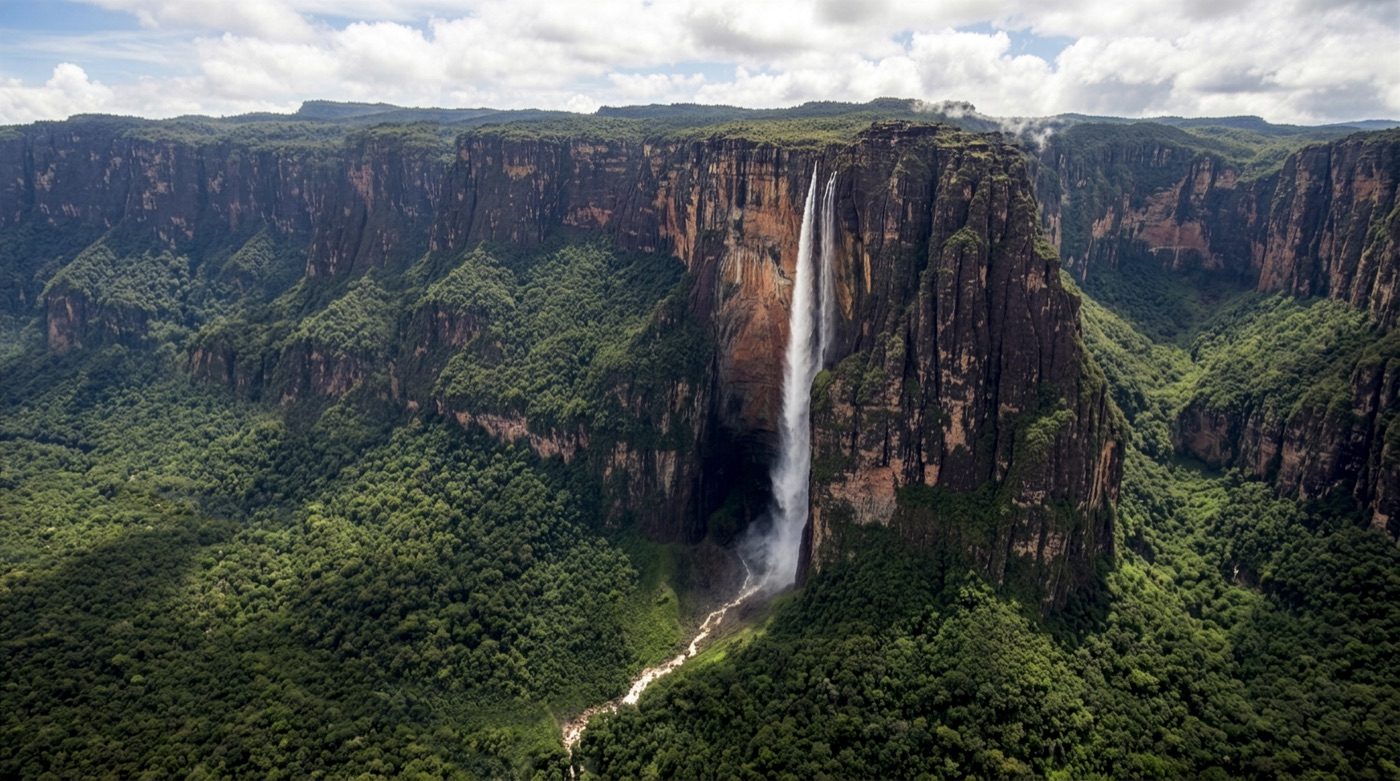
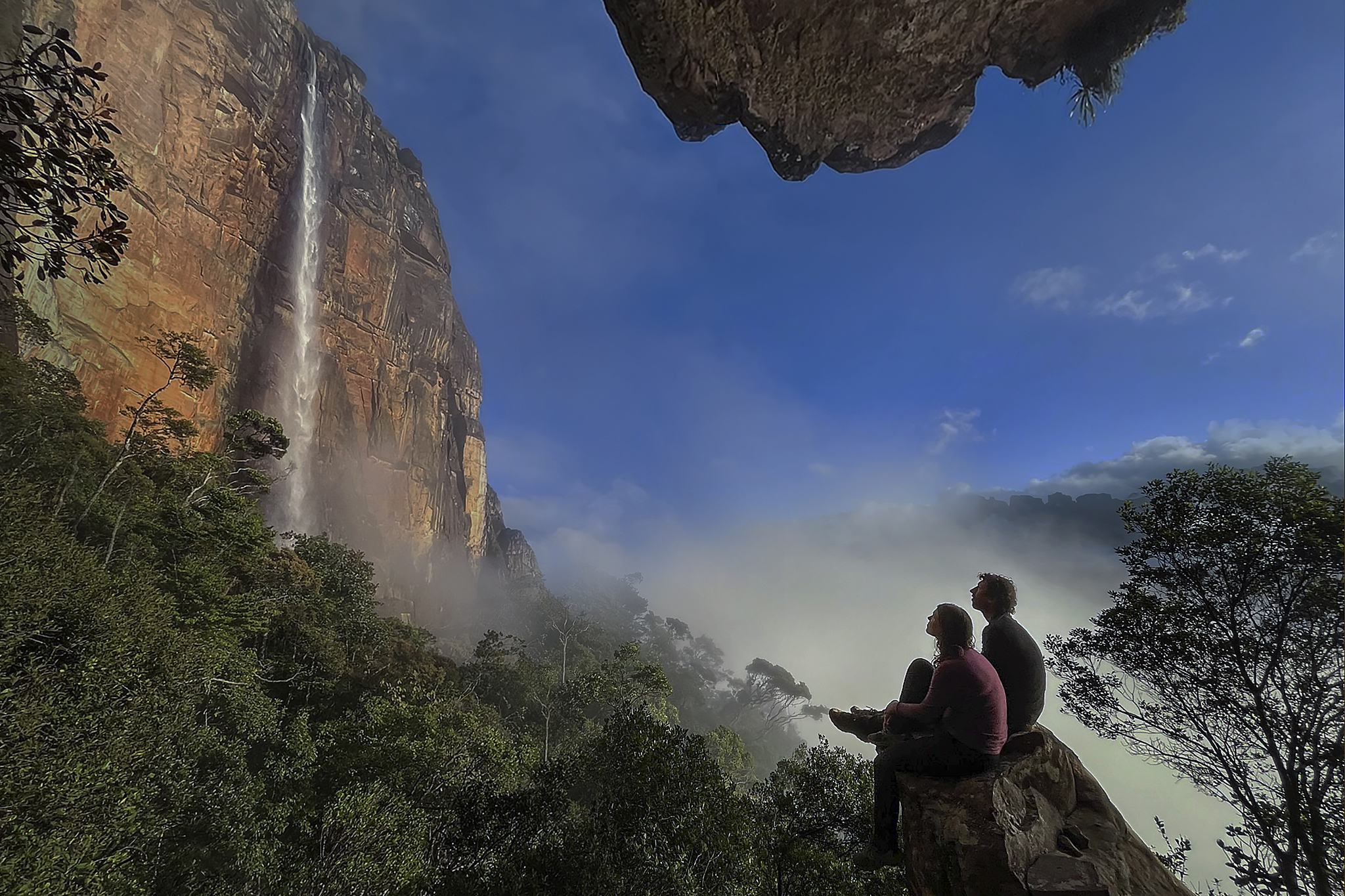
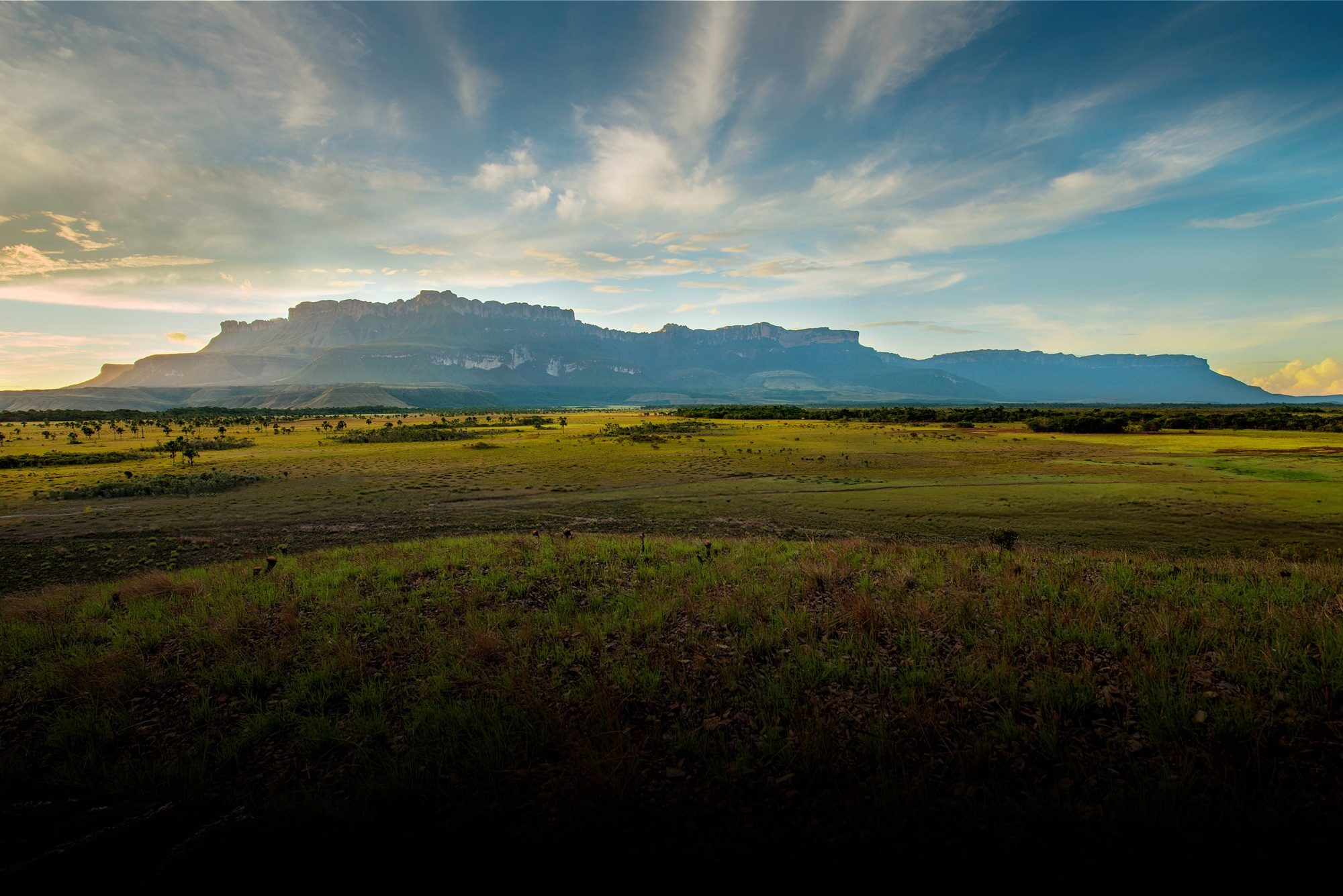
Across the savannahs of southeastern Venezuela, more than a hundred tepuis rise abruptly from the landscape. Their tabletop summits have been isolated from the world below for millions of years, allowing unique ecosystems to develop on each tepui. The largest is Auyán-tepui, a vast expanse of pink sandstone from which Angel Falls, the world’s highest waterfall, plunges nearly a kilometer into the jungle below.
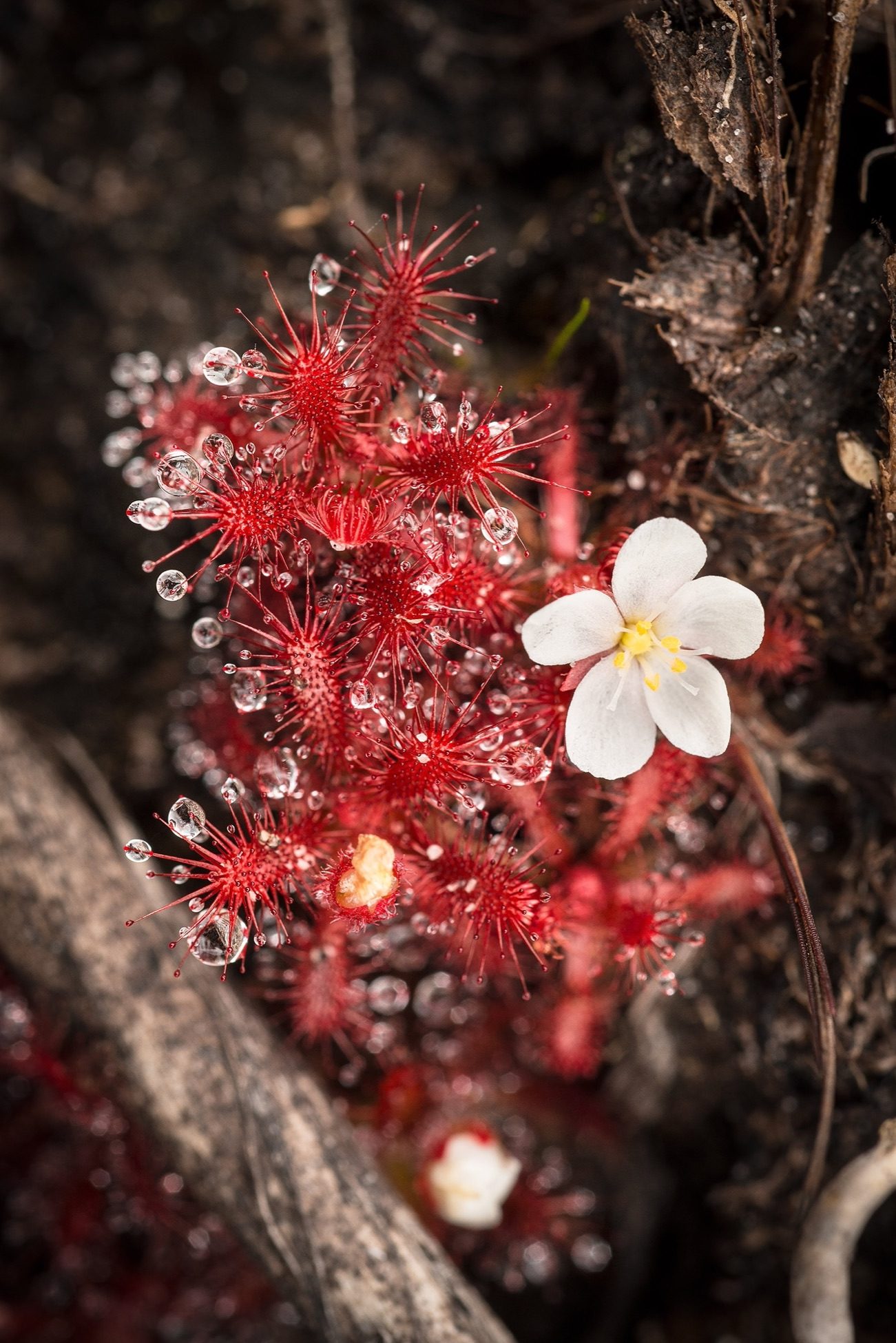
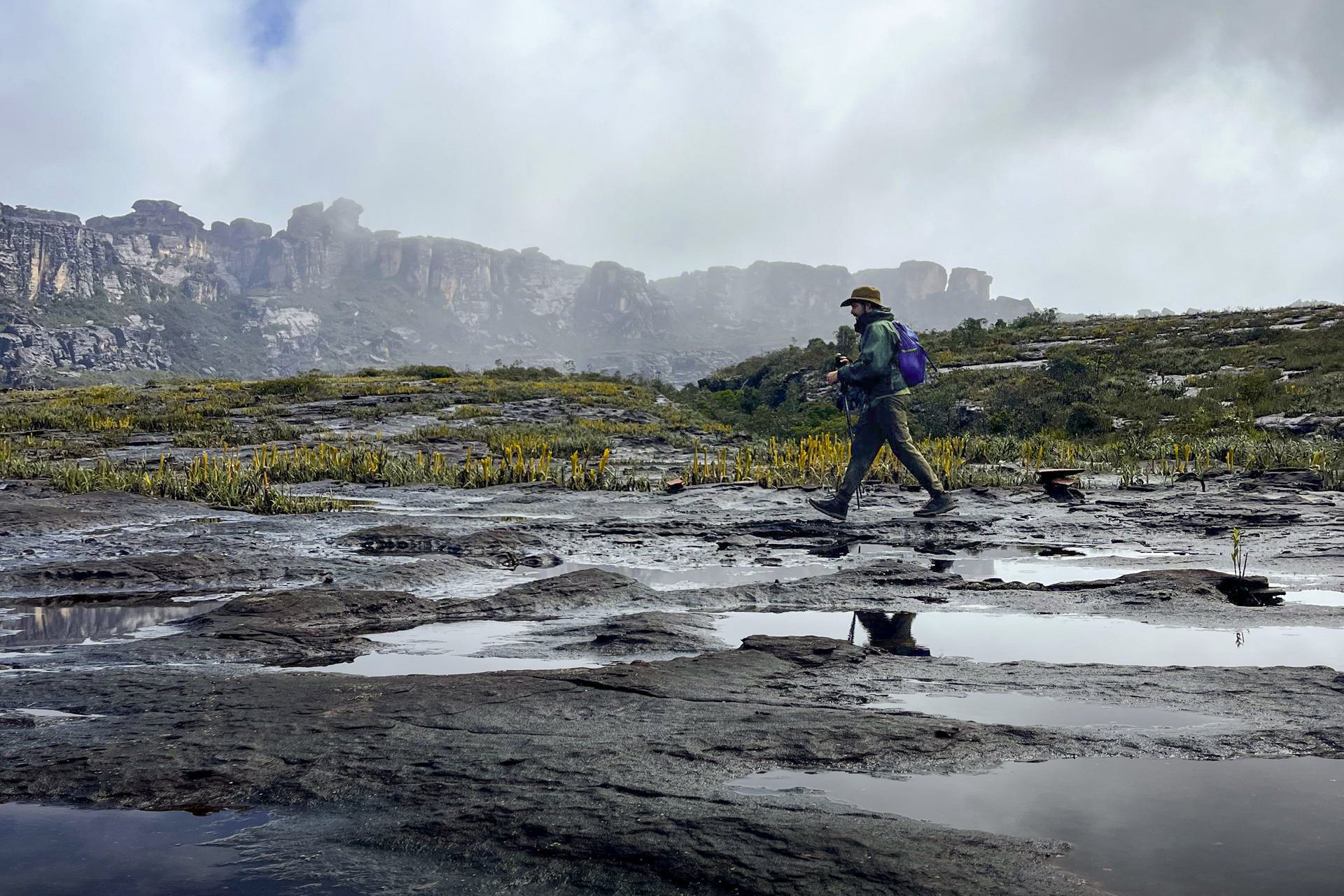
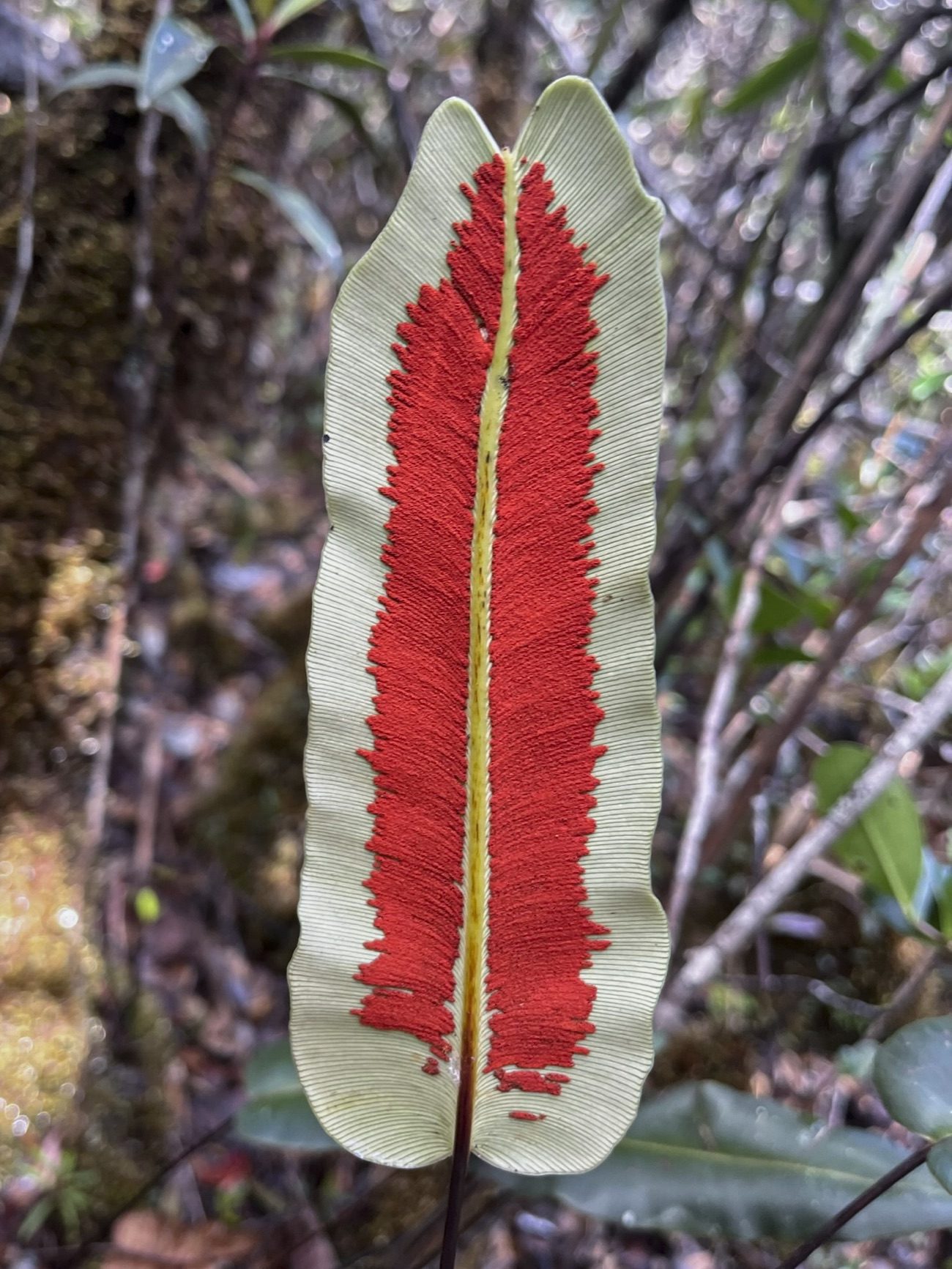
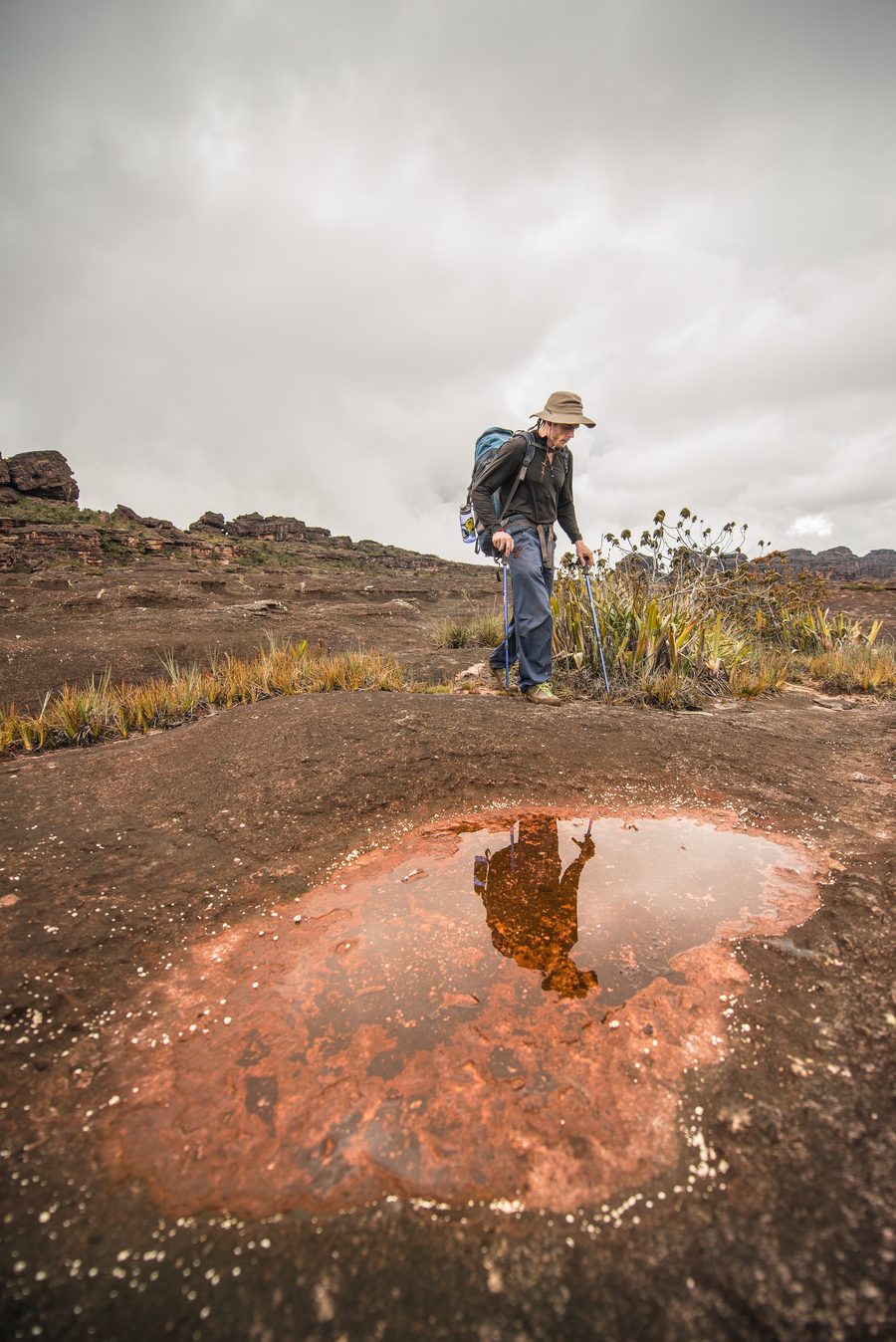
From a distance, it looks like an impenetrable fortress. On top, it contains many worlds: golden rivers, pink beaches, lunar landscapes, and plant species found nowhere else on Earth.
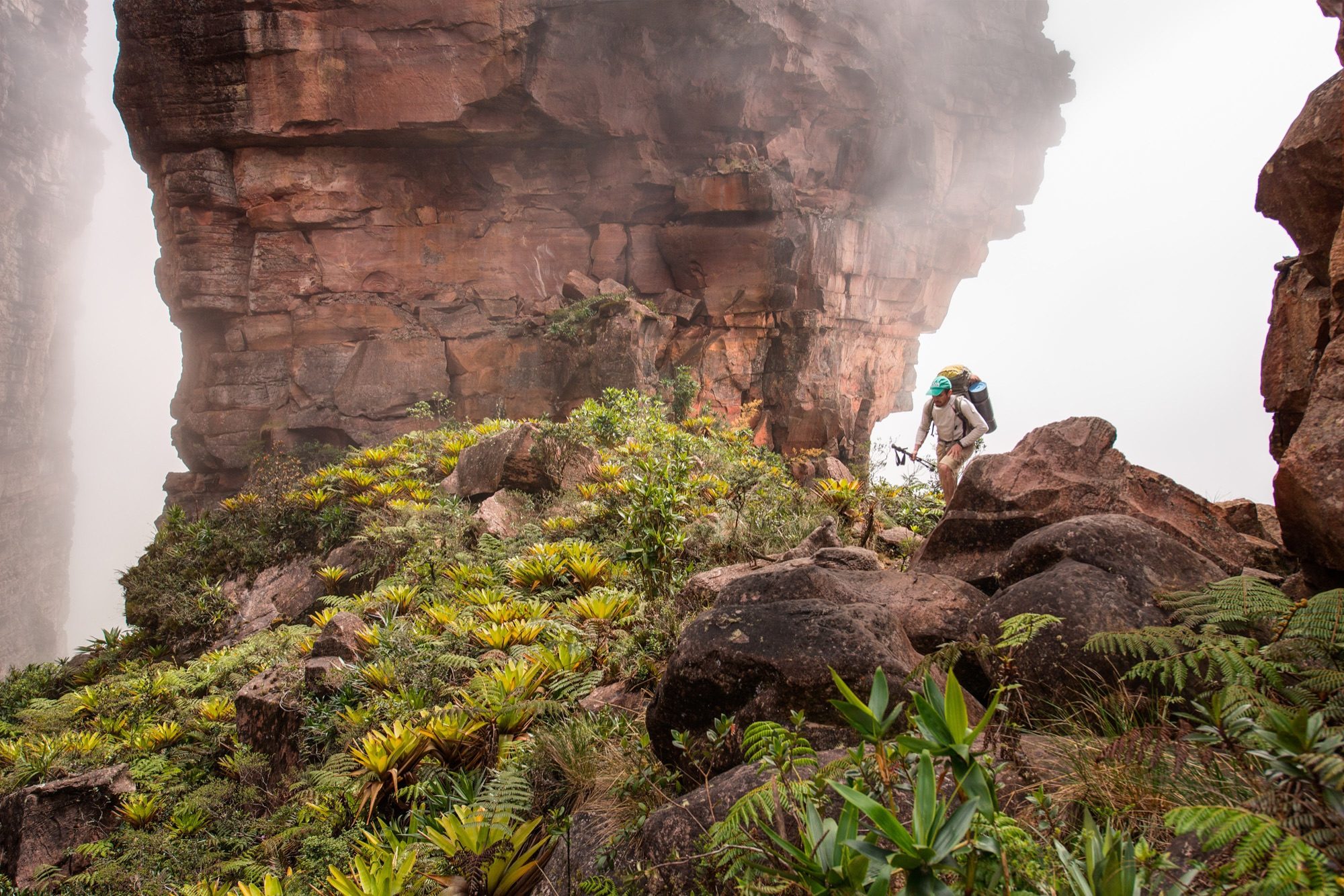
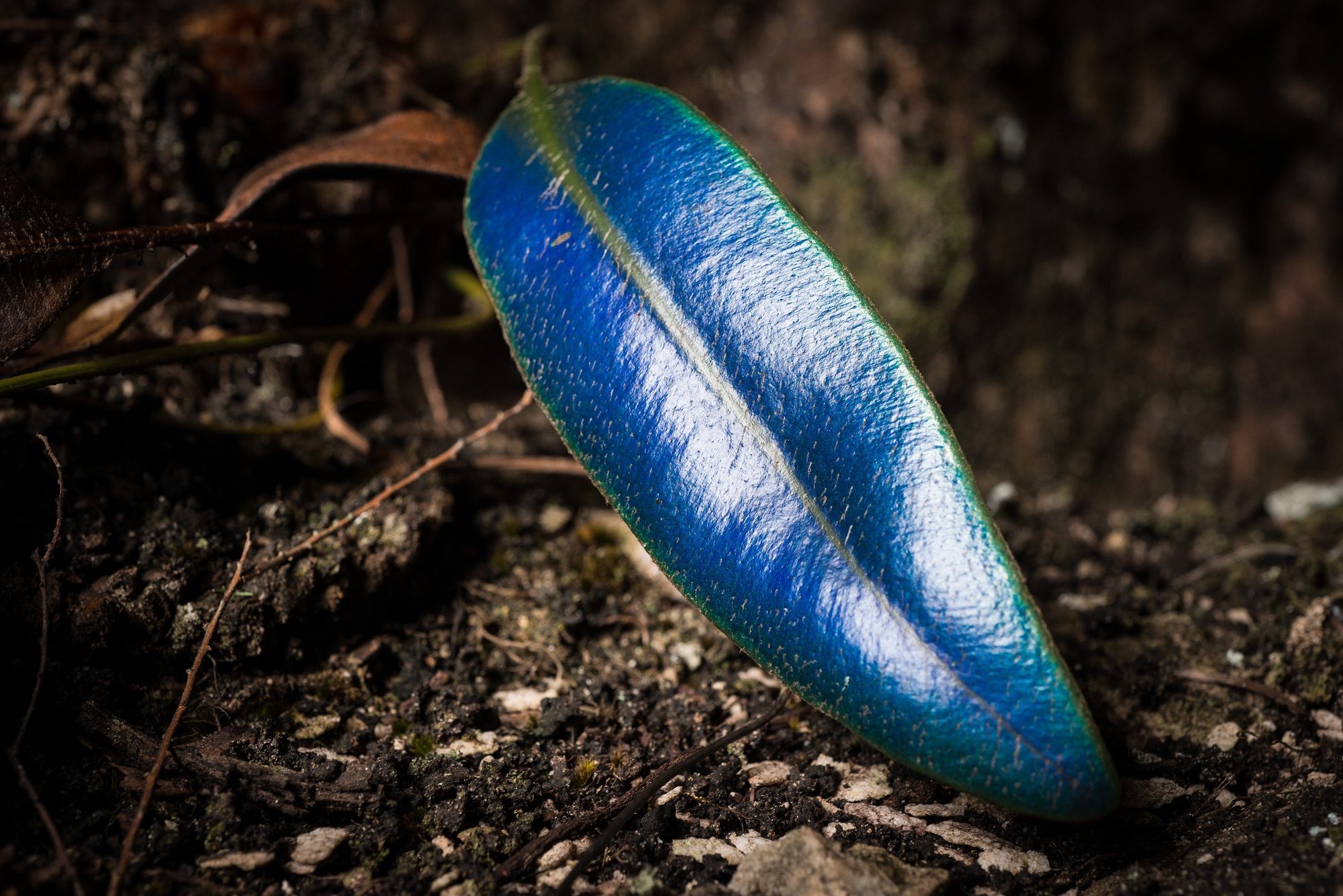
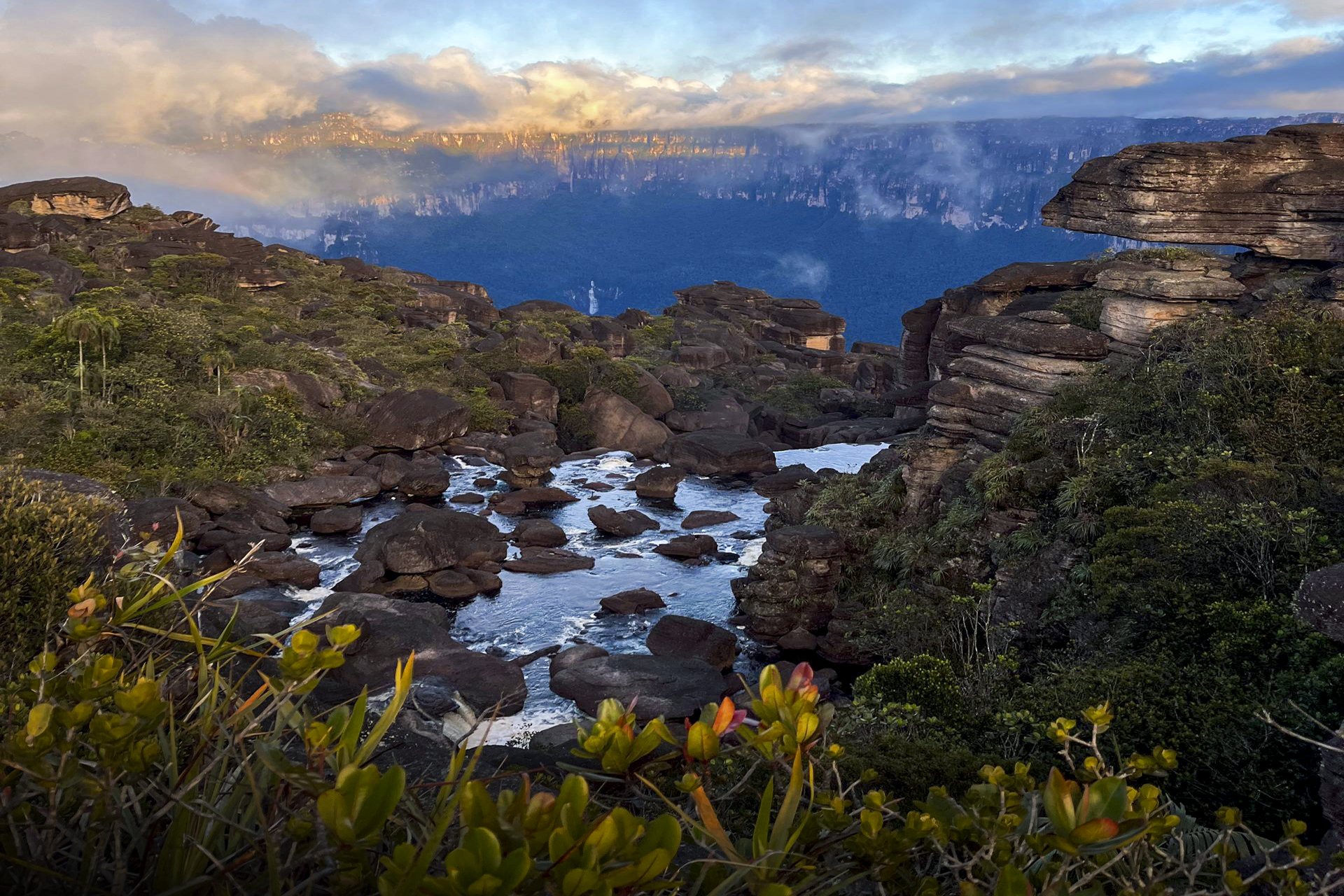
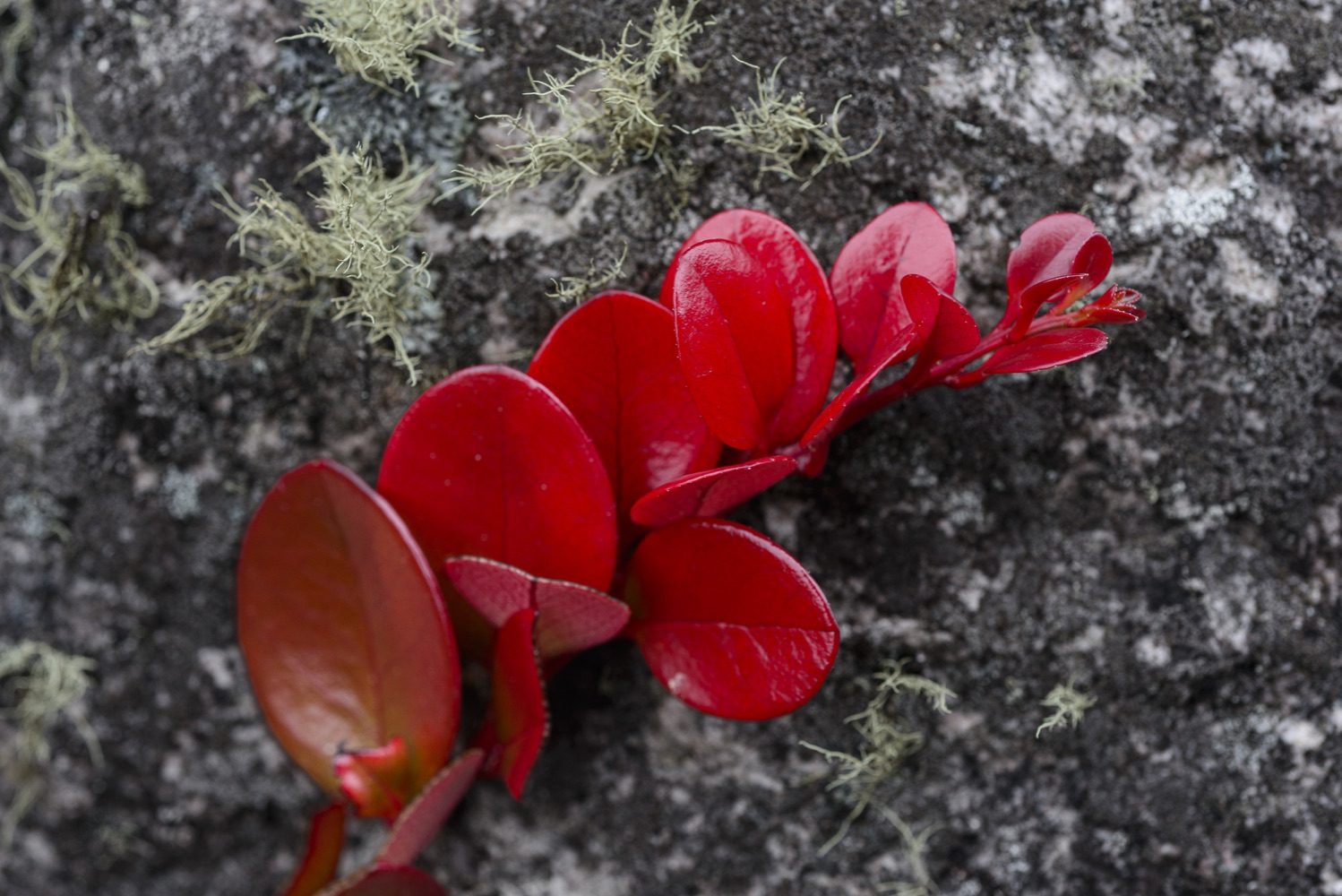
Much of Auyán-tepui remains unexplored, and only a small number of people have ever made this crossing. For days, ours may be the only footsteps around. There are no roads or settlements here, no lodges waiting ahead. Once we set out, the outside world disappears quickly, and life becomes very simple: walking, eating, sleeping, swimming in rivers, and taking in the wonder of where you are. Everything we need travels with us until we reach the bottom of Angel Falls.
Much of Auyán-tepui remains unexplored, and only a small number of people have ever made this crossing. For days, ours may be the only footsteps around. There are no roads or settlements here, no lodges waiting ahead. Once we set out, the outside world disappears quickly, and life becomes very simple: walking, eating, sleeping, swimming in rivers, and taking in the wonder of where you are. Everything we need travels with us until we reach the bottom of Angel Falls.
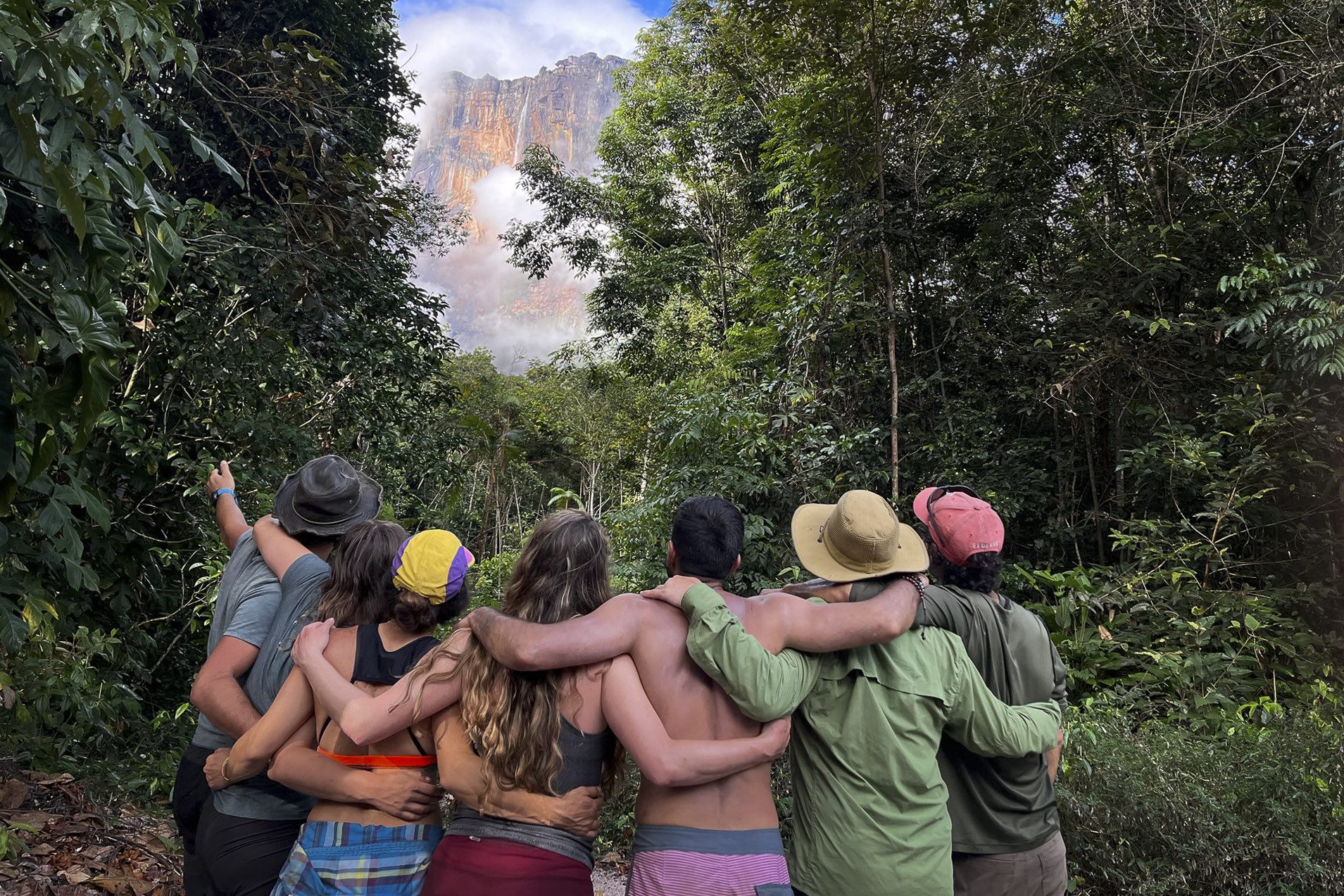
A commercial flight to Canaima and a small plane onward take us to Kavac, a small Pemón outpost in the valley beneath Auyán-tepui, where we spend the afternoon exploring a narrow canyon carved deep into the sandstone by the amber-colored waters of the tepui.
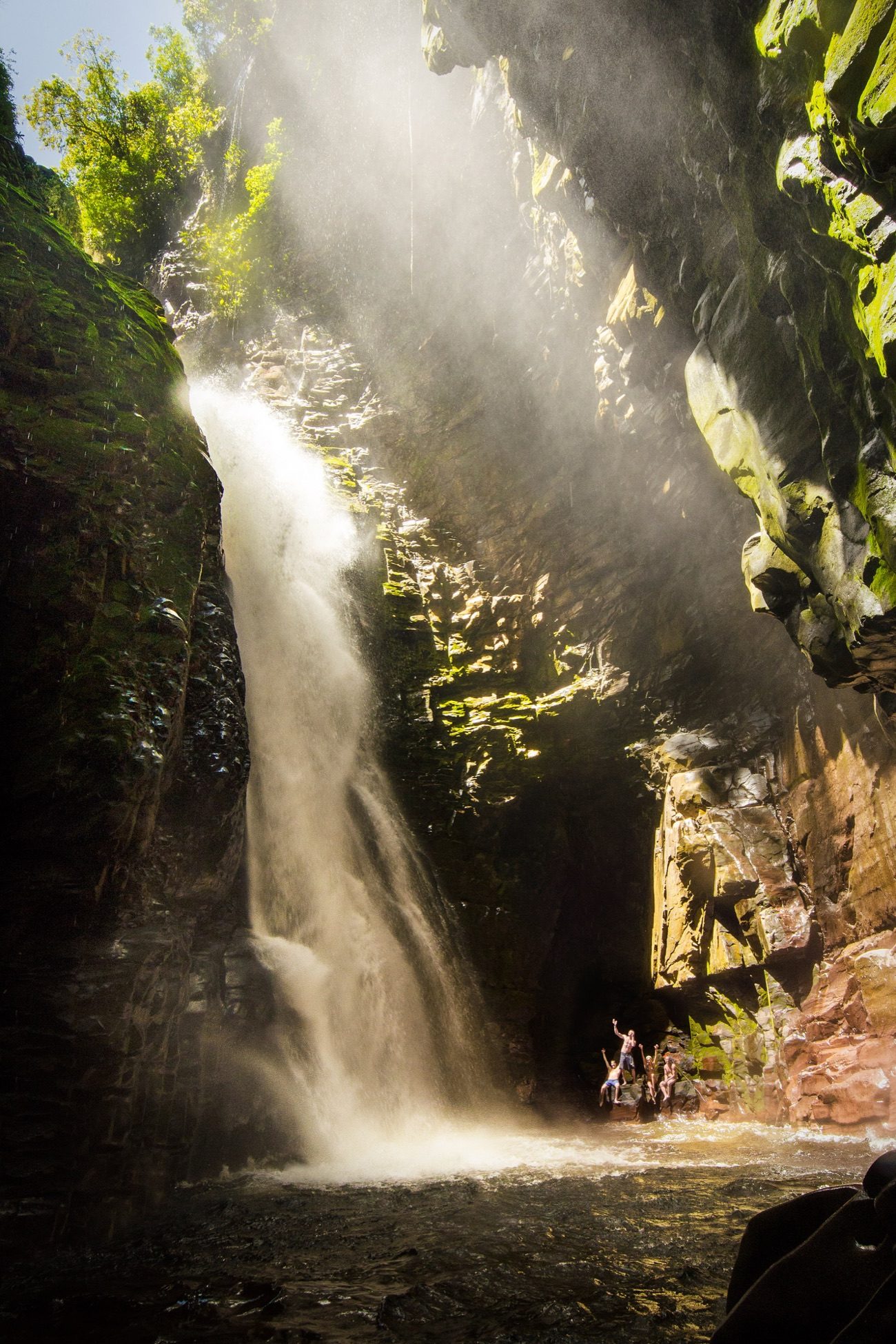
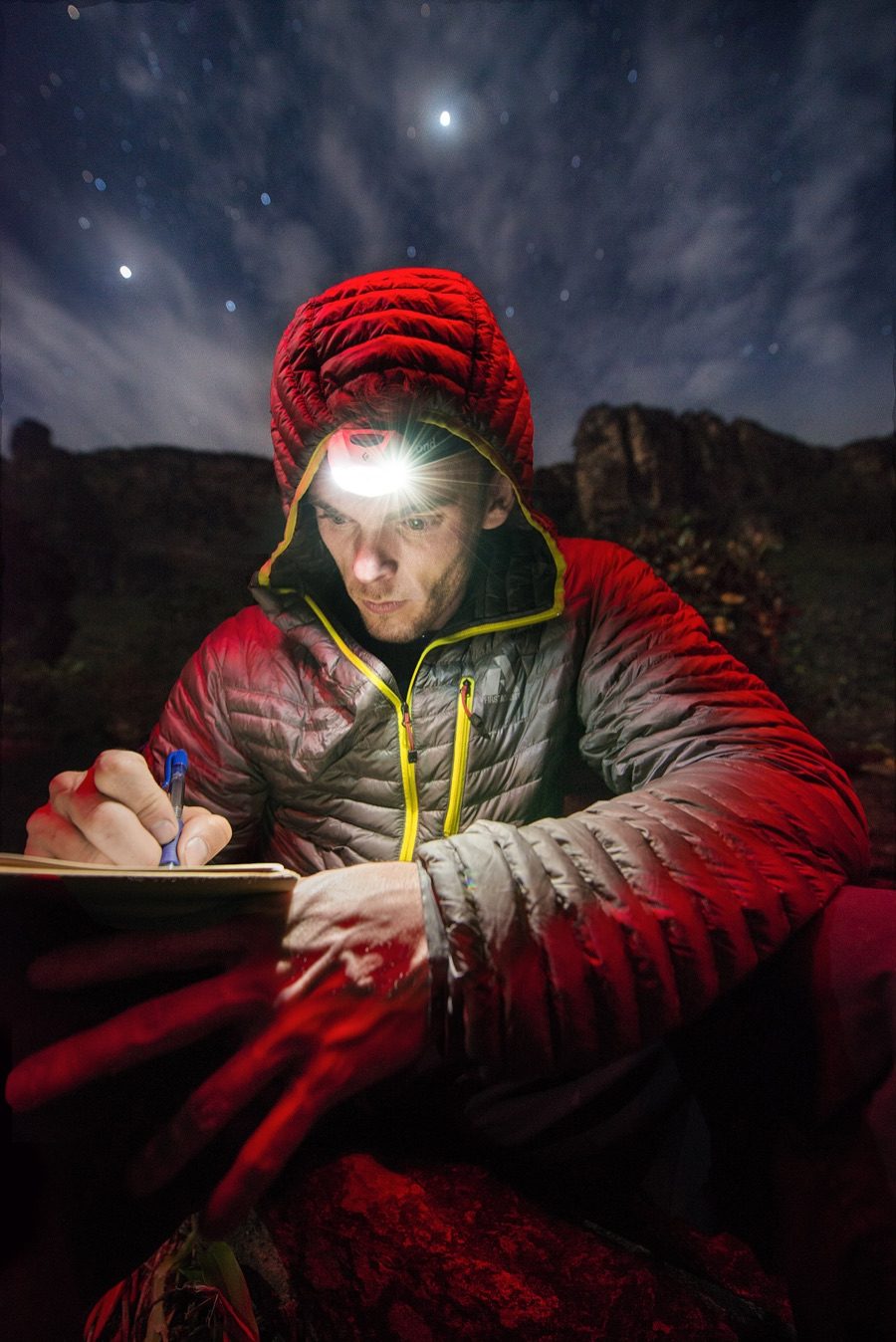
That evening, we share our first dinner and meet the Pemón team who will accompany us across the mountain. We sleep in hammocks under a roof for the last time before Auyán-tepui becomes home for the next nine days.
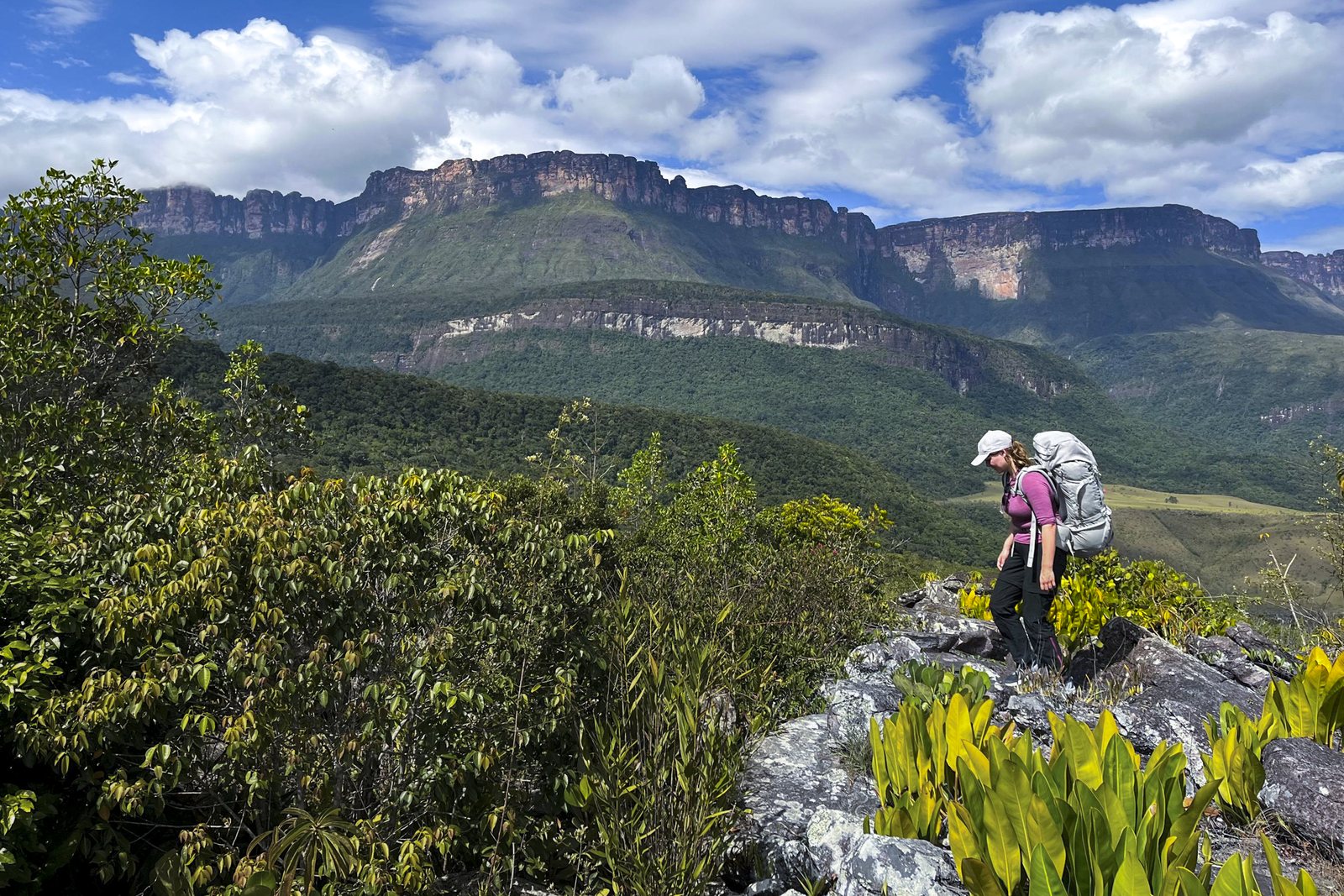
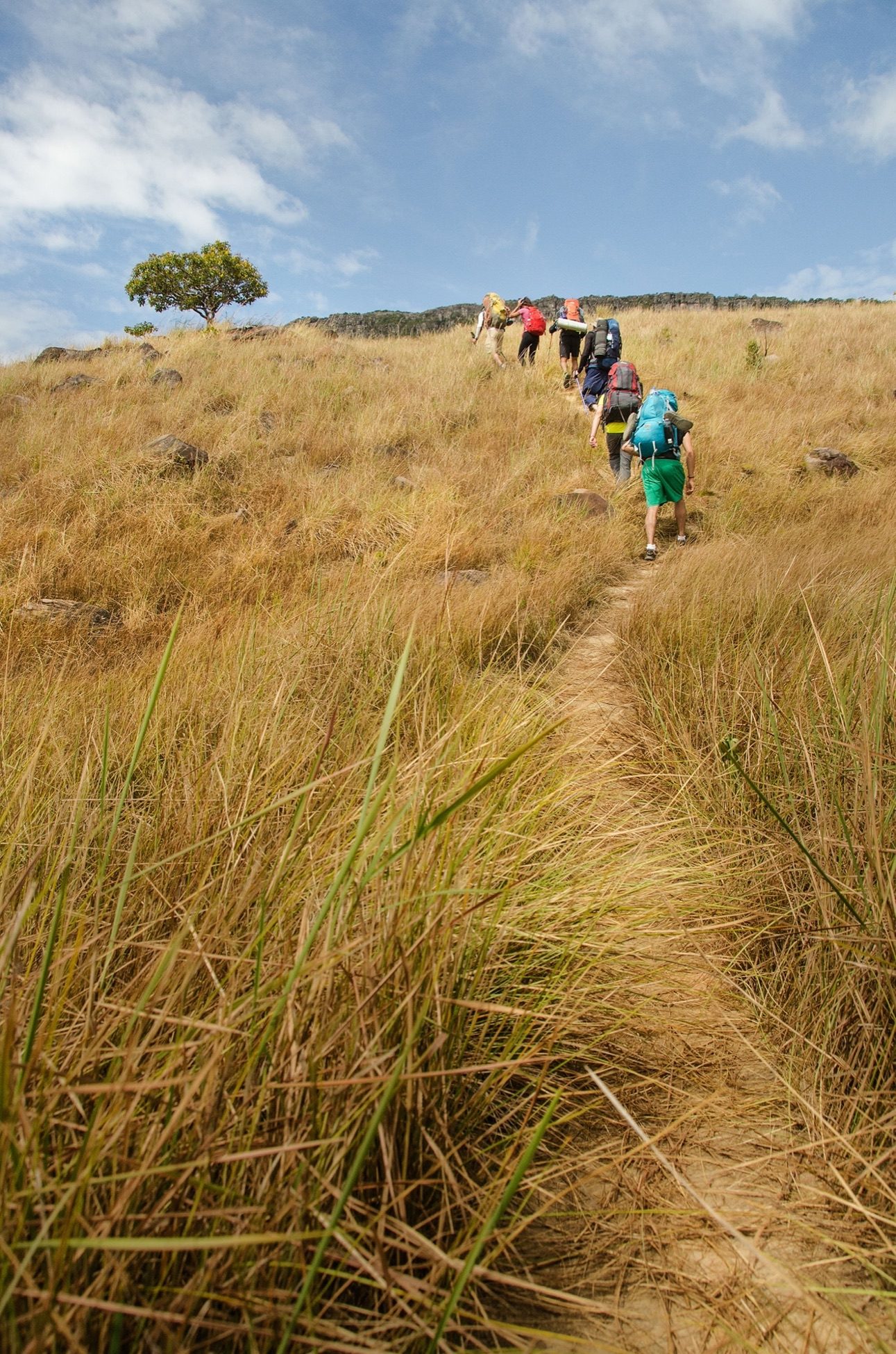
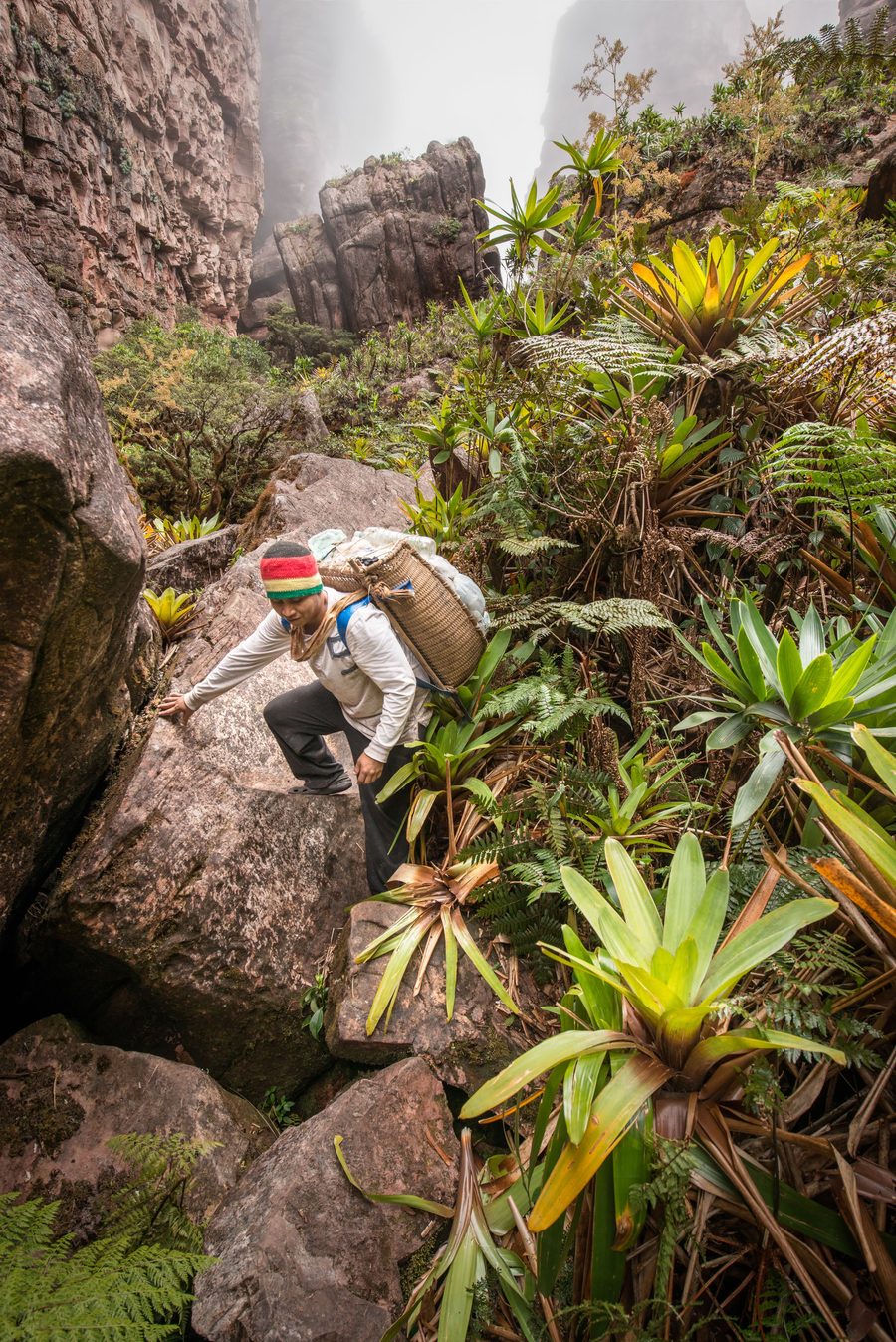
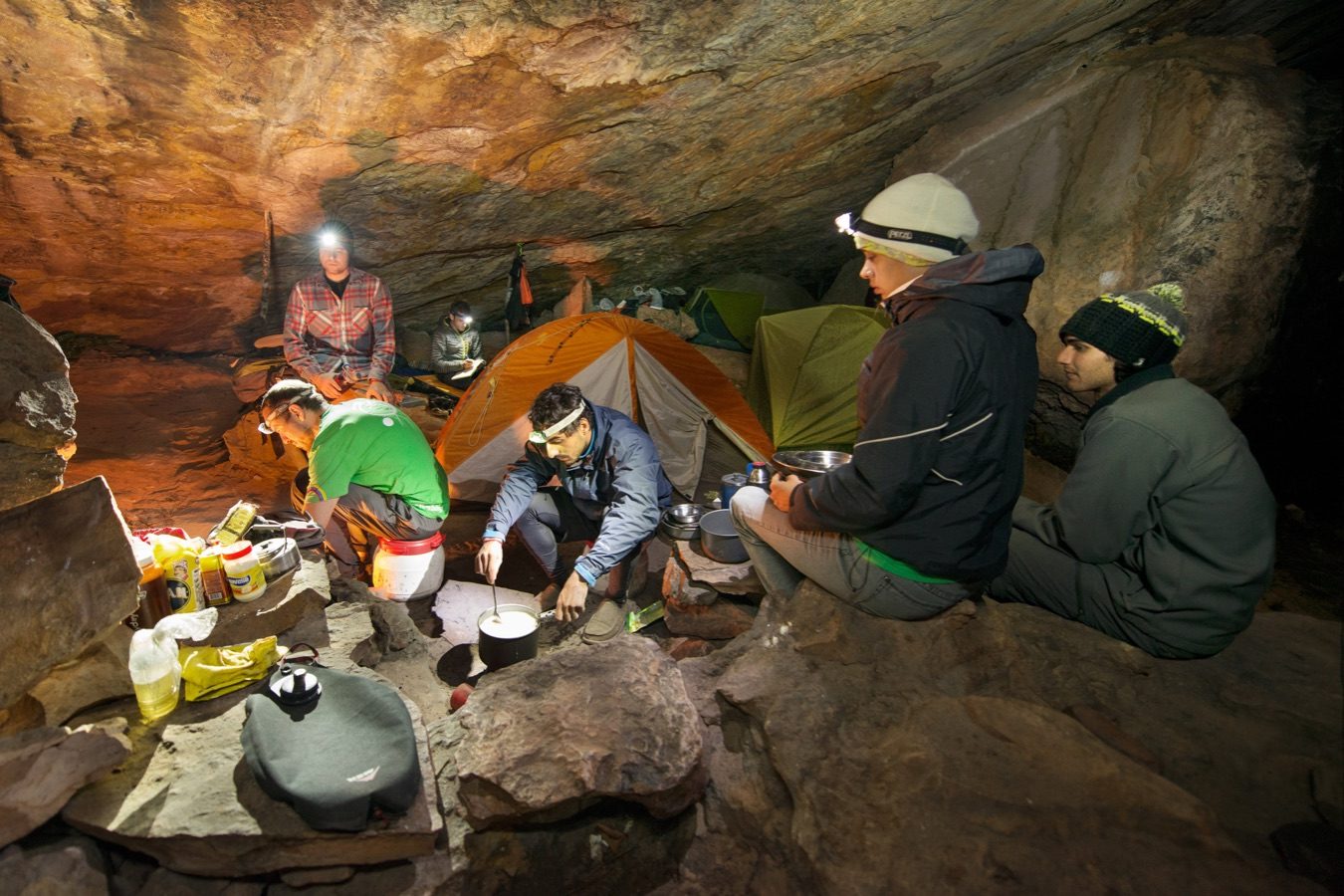
Over the next six days, we climb from open savannah through steep rainforest to the summit, then cross the interior of Auyán-tepui, following the waters that eventually become Angel Falls. The terrain changes constantly: jungles, rock mazes, rivers and marshes, with frequent rainbows along the way. A few steeper scrambles require ropes, and we cross several streams. We sleep in tents and wherever the tepui offers shelter, nearly always beside fresh running water.
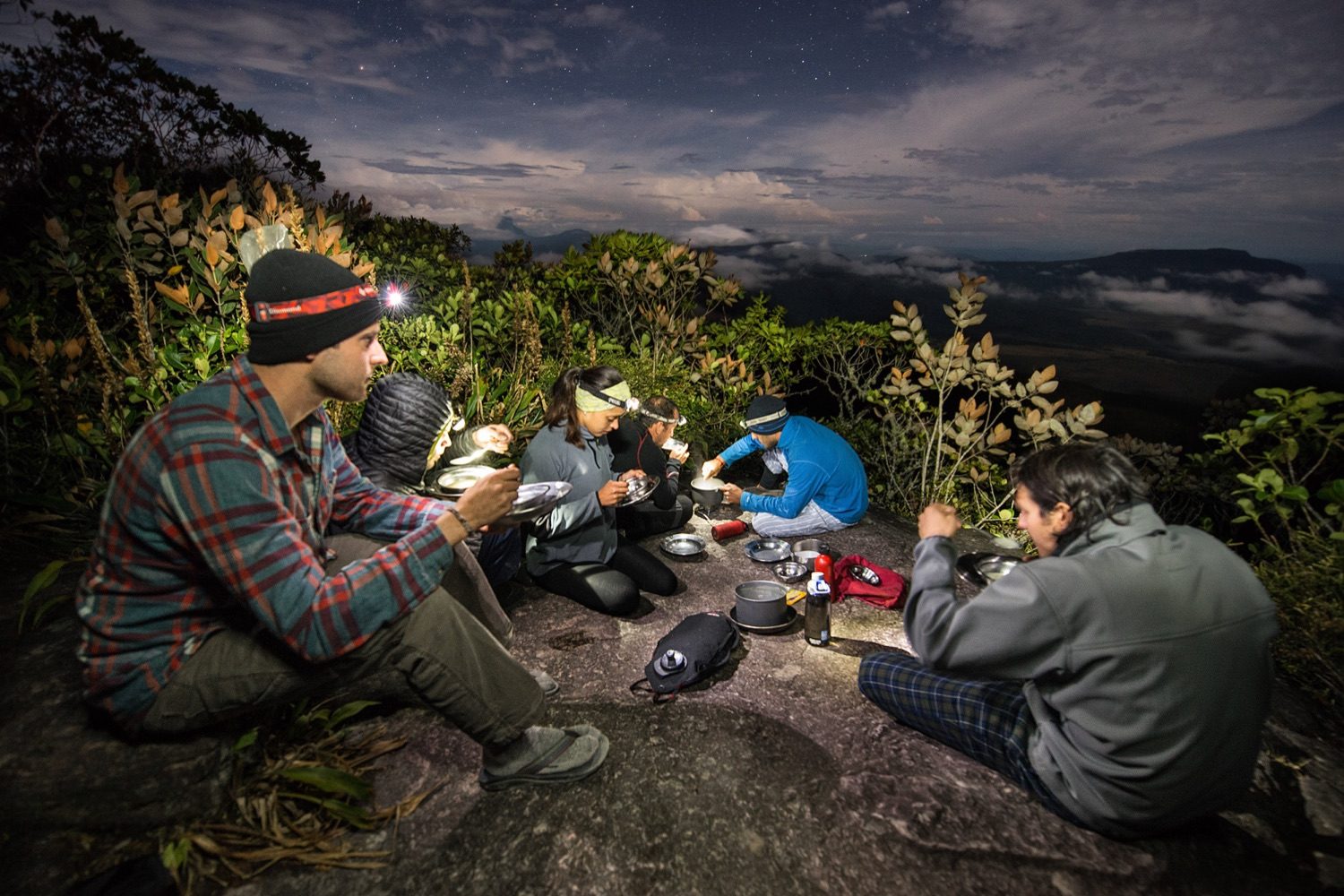
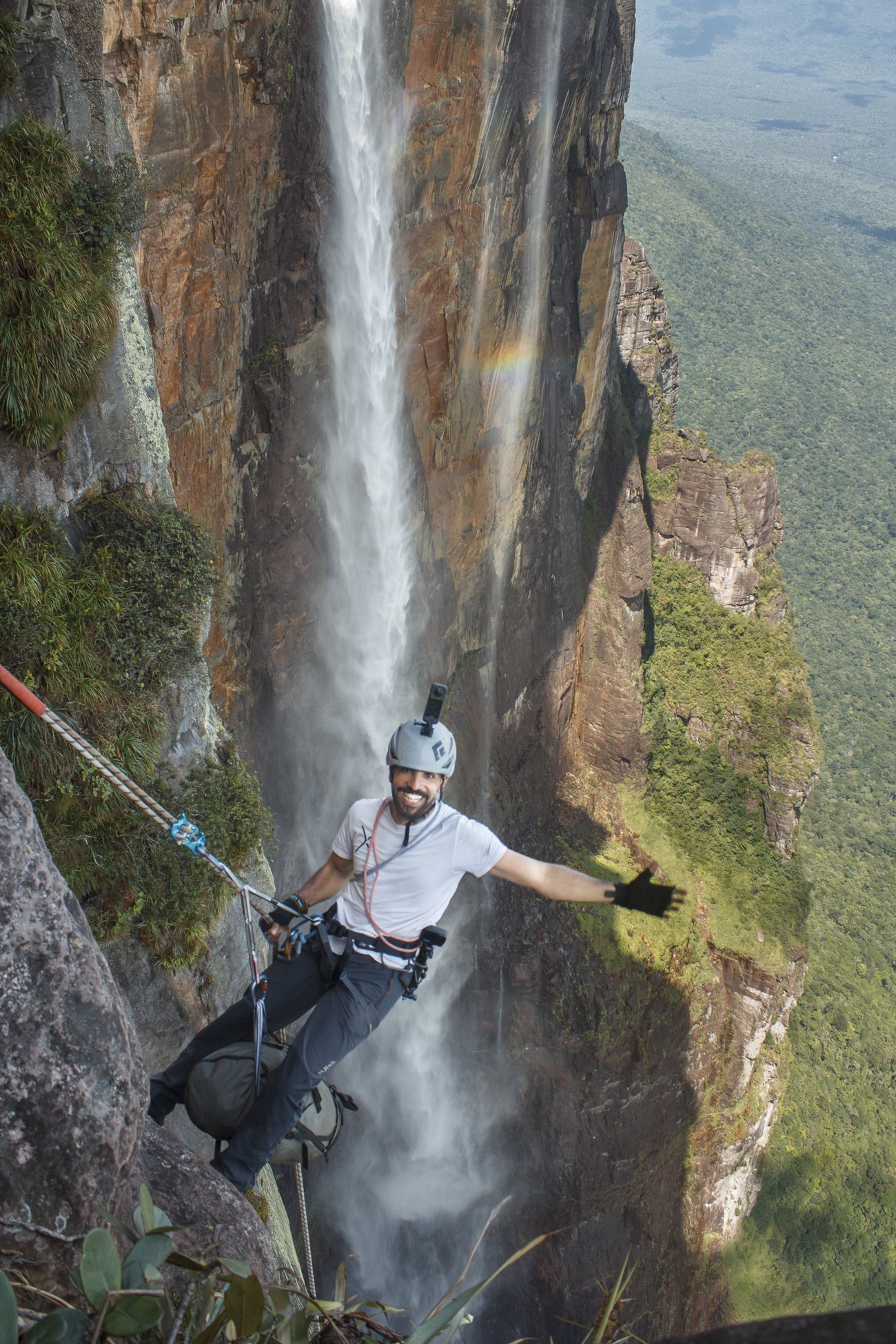
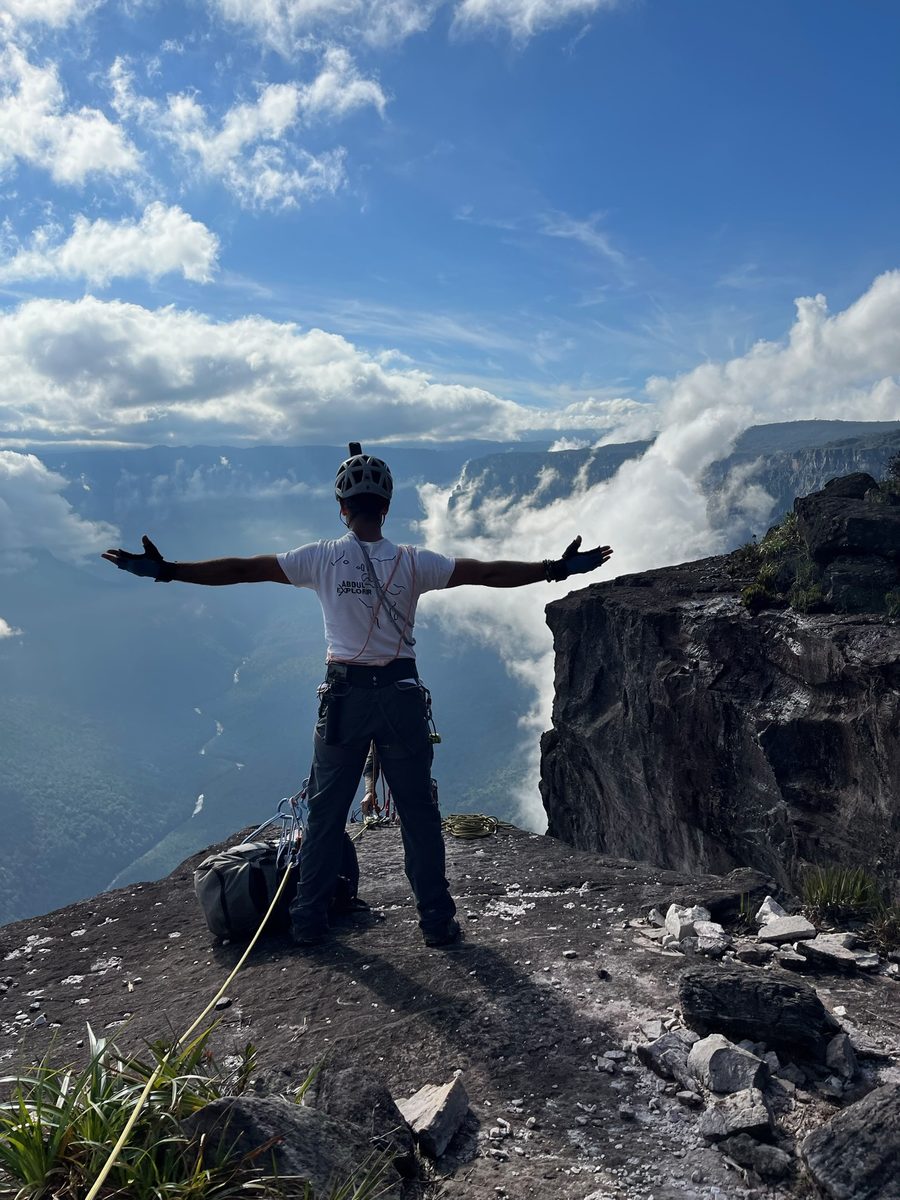
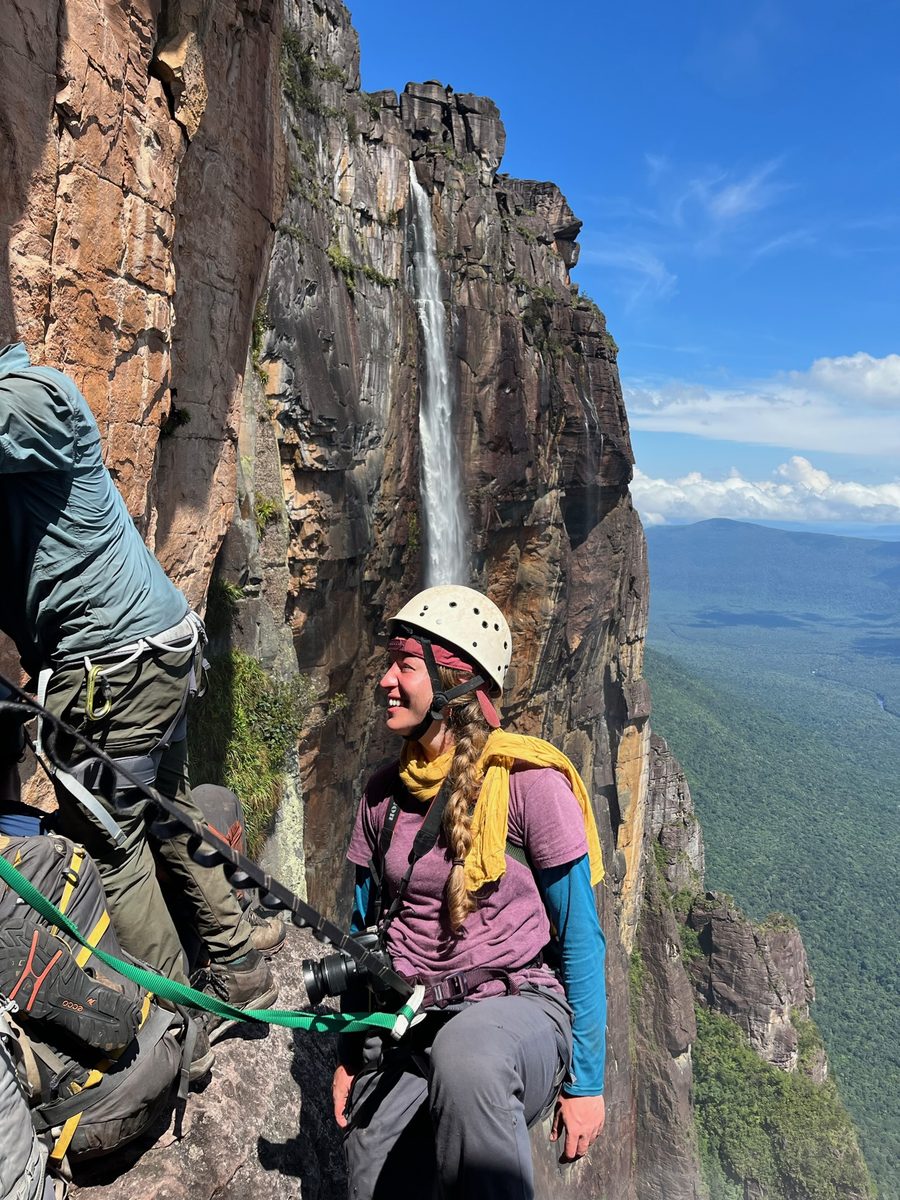
At the top of Angel Falls, we stop for a day to rest, explore and practice rappelling before beginning the descent. Twelve pitches over two days take us nearly a kilometer down the side of Auyán-tepui, including several free-hanging descents. The scale is intimidating, but once you’re comfortable on the rope, gravity does most of the work.
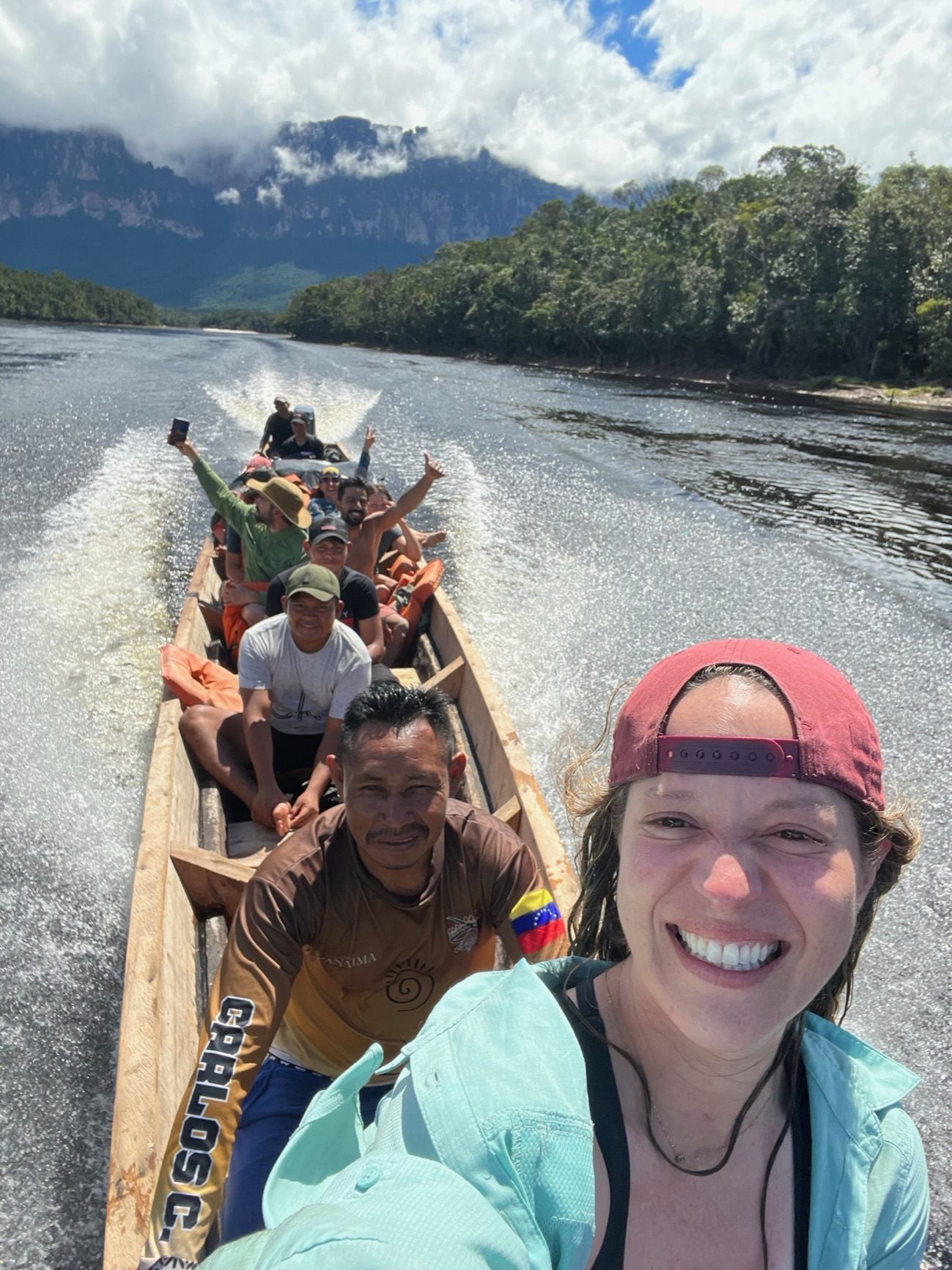
Our last night in the wilderness is spent in hammocks at Isla Ratón. The next morning we travel by curiara down the Carrao River to Canaima, stopping to swim along the way.
By afternoon, a proper bed, air-conditioning and a hot shower feel like extraordinary luxuries.
Travel day · Hammocks
Fly to Canaima and onward by small plane to Kavac. Afternoon trip to Kavac Canyon.
~10 km by 4x4 + ~6 hrs trekking · Tent camp
A short drive takes us to Uruyén, where we set out on foot across the open savannah and begin our ascent of Auyán-tepui.
~5–6 hrs trekking · Tent camp
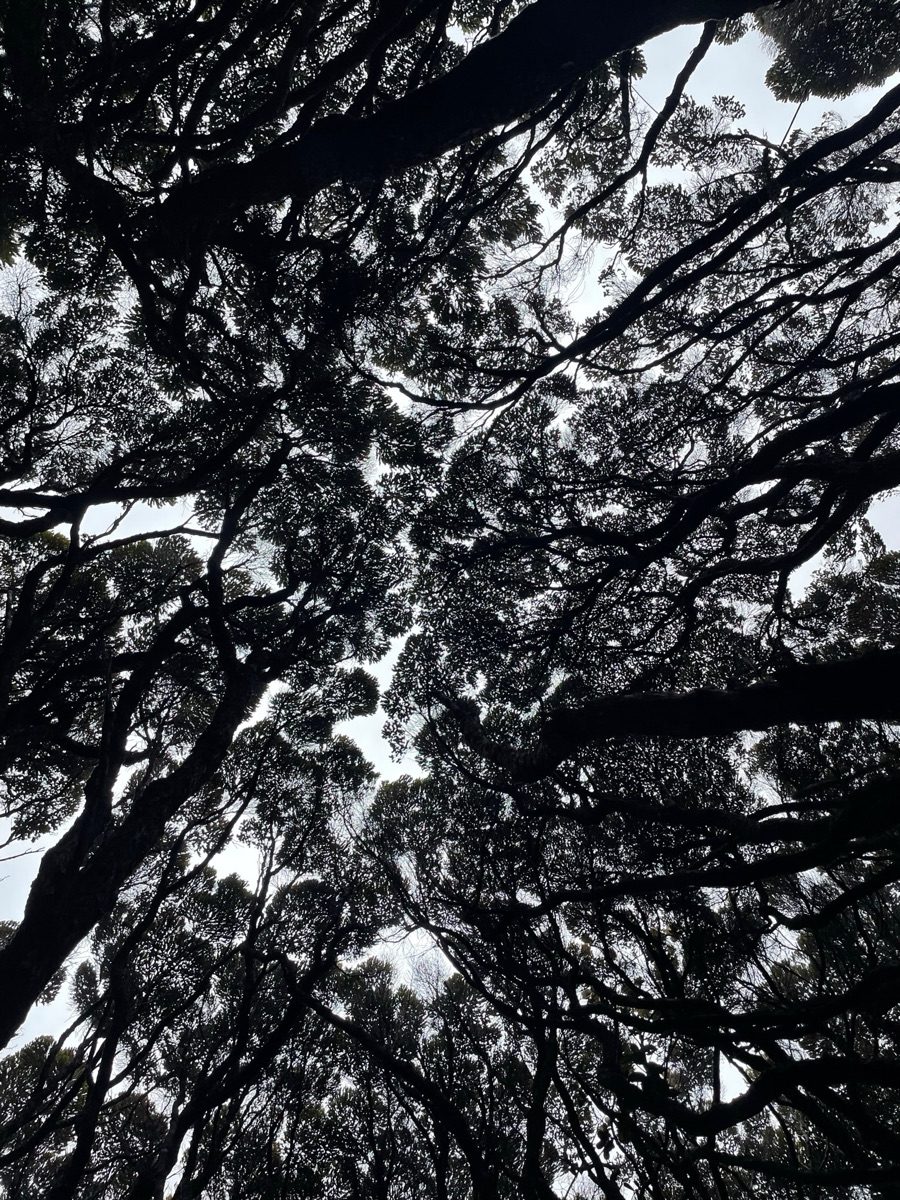
We climb through dense forest as we continue gaining elevation.
~6–7 hrs trekking · High point: 2,450 m / 8,040 ft · Tent camp
The final climb includes a scramble to Libertador, the highest point on Auyán-tepui, before we continue into the interior.
~4–5 hrs trekking · Tent camp
We begin making our way northwest across the interior of Auyán-tepui.
~7–8 hrs trekking · Tent camp
We scramble to the top of a rock wall before crossing the marsh on our way to Neblina.
~7–8 hrs trekking · Tent camp
The most physically demanding day of the expedition takes us through some of its most challenging wilderness terrain, ending at the top of Angel Falls.
Rest day · Tent camp
A day to rest, swim and explore, and to practice rappelling before the descent.
6 rappel pitches · Rock ledge
The first six pitches take us down the wall of Auyán-tepui to a protected rock ledge where we spend the night.
6 rappel pitches + ~4 hrs trekking · Hammocks
Six more pitches bring us to the jungle below, followed by a trek to Isla Ratón.
~4 hrs by curiara · Posada
We travel downriver to Canaima, stopping to swim along the way, with the afternoon free at the lagoon.
Travel day
Breakfast and the flight back to Caracas.
Getting somewhere this remote is complicated. Experiencing it shouldn’t be.
From the moment you arrive in Venezuela, we take care of everything around the expedition, so your time on the tepui belongs entirely to you.
What’s included
Round-trip commercial flights between Caracas and Canaima and charter flight between Canaima and Kavac.
All ground transfers during the expedition, including 4x4 transport to the trailhead and the curiara journey from Isla Ratón to Canaima.
Venezuelan mountain and climbing guides who know Auyán-tepui and have ample experience in rock climbing, rope systems and rappelling, together with the Pemón team who accompany us across the mountain.
Our Pemón team carries all communal camping equipment, food, ropes and other expedition supplies.
Tents, ropes and all communal camping, cooking and technical equipment required for the expedition.
National park and tepui access permits and the necessary arrangements with Pemón communities along the route.
All meals from Day 1 through breakfast on Day 12, freshly prepared throughout the expedition. Dietary restrictions can be accommodated with advance notice.
Accommodation in Kavac on Day 1 and Canaima on Day 11, as well as all camping accommodation during the expedition. Tents and rooms in Canaima are shared.
Guidance through the Venezuelan visa process and help with the documentation and travel requirements for the trip.
Satellite communications and a group first-aid kit carried throughout the expedition.
Professional photography throughout the expedition, including the traverse and rappel descent, with a curated collection of high-resolution action, portrait and landscape images delivered to each guest after the trip.
What’s not included
International airfare and transportation to the departure point in Caracas.
Accommodation before departure or after return to Caracas.
Visa, consular and other government fees associated with entering Venezuela.
Clothing, footwear, backpack, sleeping bag and other personal equipment specified on the expedition packing list.
Each guest brings the technical equipment specified on the packing list. Rental equipment may be arranged in advance where available.
Personal first-aid supplies and prescription or personal medications.
Guests carry their own personal equipment. A dedicated porter for personal belongings can be arranged for an additional fee.
Travel, medical and evacuation insurance. Specific coverage requirements will be provided before booking.
Gratuities, alcoholic beverages, personal purchases and other incidental expenses.
Snacks between meals. All main meals are provided.
Round-trip commercial flights between Caracas and Canaima and charter flight between Canaima and Kavac.
All ground transfers during the expedition, including 4x4 transport to the trailhead and the curiara journey from Isla Ratón to Canaima.
Venezuelan mountain and climbing guides who know Auyán-tepui and have ample experience in rock climbing, rope systems and rappelling, together with the Pemón team who accompany us across the mountain.
Our Pemón team carries all communal camping equipment, food, ropes and other expedition supplies.
Tents, ropes and all communal camping, cooking and technical equipment required for the expedition.
National park and tepui access permits and the necessary arrangements with Pemón communities along the route.
All meals from Day 1 through breakfast on Day 12, freshly prepared throughout the expedition. Dietary restrictions can be accommodated with advance notice.
Accommodation in Kavac on Day 1 and Canaima on Day 11, as well as all camping accommodation during the expedition. Tents and rooms in Canaima are shared.
Guidance through the Venezuelan visa process and help with the documentation and travel requirements for the trip.
Satellite communications and a group first-aid kit carried throughout the expedition.
Professional photography throughout the expedition, including the traverse and rappel descent, with a curated collection of high-resolution action, portrait and landscape images delivered to each guest after the trip.
International airfare and transportation to the departure point in Caracas.
Accommodation before departure or after return to Caracas.
Visa, consular and other government fees associated with entering Venezuela.
Clothing, footwear, backpack, sleeping bag and other personal equipment specified on the expedition packing list.
Each guest brings the technical equipment specified on the packing list. Rental equipment may be arranged in advance where available.
Personal first-aid supplies and prescription or personal medications.
Guests carry their own personal equipment. A dedicated porter for personal belongings can be arranged for an additional fee.
Travel, medical and evacuation insurance. Specific coverage requirements will be provided before booking.
Gratuities, alcoholic beverages, personal purchases and other incidental expenses.
Snacks between meals. All main meals are provided.
Auyán-tepui is extraordinarily hard on clothing and equipment. Expect your gear to get wet, muddy, scratched and snagged along the way. Bring things that are durable, quick-drying and that you don’t mind putting through considerable abuse.
There are opportunities to wash clothes during the traverse and, weather permitting, dry them at camp, so there is no need to pack twelve days’ worth of clothing.
Quick-drying trekking pants and shirts, trekking socks, shorts, bathing suit, warm camp/sleeping clothes, fleece, waterproof jacket, sun hat and warm hat. Avoid cotton.
Hiking boots with excellent grip and water/camp shoes. Trekking poles are strongly recommended.
50–70 L backpack with a waterproof liner, sleeping bag, foam sleeping pad, headlamp, quick-dry towel and a minimum 2 L water-carrying capacity.
High-SPF sunscreen, sunglasses, insect repellent, personal toiletries, medications and a small personal first-aid kit. Unscented and biodegradable toiletries are preferred.
Climbing helmet, harness, rappelling gloves and personal rappelling equipment. A complete technical equipment list will be provided before departure.
Bring your own snacks for the trail and between meals. Energy bars, chocolate, gummies, trail mix and other things you like to eat on a long day work well.
Camping pillow, gaiters and a personal water purifier such as a Grayl.
A complete packing list, including quantities and technical specifications, is provided to confirmed guests.
You should be in good physical condition and comfortable hiking with a backpack for several hours at a time over difficult and constantly changing ground. Some days involve steep ascents, scrambling, mud, river crossings and plenty of ducking, weaving and clambering through dense jungle.
You do not need to be an elite athlete, but this is a demanding expedition and you should arrive well prepared. The fitter you are, the more you will enjoy it. We will provide training guidance before departure so you know what to prepare for.
Previous climbing or rappelling experience is not required. There are some scrambles and fixed ropes during the ascent, and our guides will help you through each section. We move as a team, and safety always comes first.
Before beginning the descent, we spend a full day at Angel Falls practicing rappelling, so you’ll have plenty of time to learn the techniques, get comfortable with the equipment and ask questions before we head over the edge.
If you have never rappelled before and think a little familiarity would make you more comfortable, we recommend taking a basic rappelling course before the expedition. It isn’t required, but arriving already familiar with a harness, descender and the basic movements can make the experience feel much less daunting.
A healthy respect for heights is perfectly normal. You do not need to be fearless to do this expedition.
The descent from Angel Falls is exposed, and there is no point pretending otherwise. But you will be secured by redundant rope systems throughout the rappels, accompanied by experienced guides and given plenty of time to become comfortable with the equipment and technique before the descent begins.
We have seen people arrive with a real fear of heights and become so mesmerized by the scale and beauty of the surroundings that the fear seems to fade into the background.
If you have a severe fear of heights, however, this may not be the expedition for you. If you are unsure, talk to us before booking. We’re here to help you decide.
Well… as comfortable as 11 days in the wilderness can reasonably be.
For much of the expedition there are no beds, showers, conventional bathrooms, electricity or phone signal. We consider these features, not bugs. (There will be actual bugs, by the way.) You will get wet. You will get muddy. You will sleep in tents, bathe in rivers and live with very few of the comforts of ordinary life for more than a week.
Such is the price of spending a few days in a place that feels like another planet.
It’s a fair question.
Venezuela went through a difficult period and, for several years, was largely cut off from international tourism. Much has changed since then. Crime and social unrest have declined significantly, international connections are returning, and the country is gradually opening back up to the world.
Tourism infrastructure is still catching up, and roads, airports and services can be less predictable than in more established destinations. In many ways, that makes this a particularly interesting time to visit, as Venezuela remains well off the international tourism circuit.
The expedition itself takes place almost entirely in Canaima National Park and the wilderness of Auyán-tepui, far from the country’s major cities. We travel directly from Caracas to Canaima and the Kamarata Valley, and from there into the tepui. Crime is not a significant concern along the expedition route; the risks we manage there are those of traveling through a remote wilderness.
We coordinate your transportation and logistics in Venezuela from arrival through the end of the expedition. And if you would like to spend a few extra days in Caracas, we would be happy to help arrange accommodation, transportation and sightseeing. The city has become considerably safer in recent years and is well worth discovering for itself.
Guests carry their own clothing and personal equipment. Your exact pack weight will depend on what you bring, but we aim for 8–12 kg / 18–26 lb. We provide detailed packing and weight guidance well before departure.
Our Pemón team carries communal expedition equipment, including tents, ropes and other group gear.
If you would rather lighten your load, a personal porter can be arranged in advance for an additional fee.
Yes. A dedicated porter for your personal belongings, up to 15 kg / 33 lb, can be arranged in advance for an additional fee.
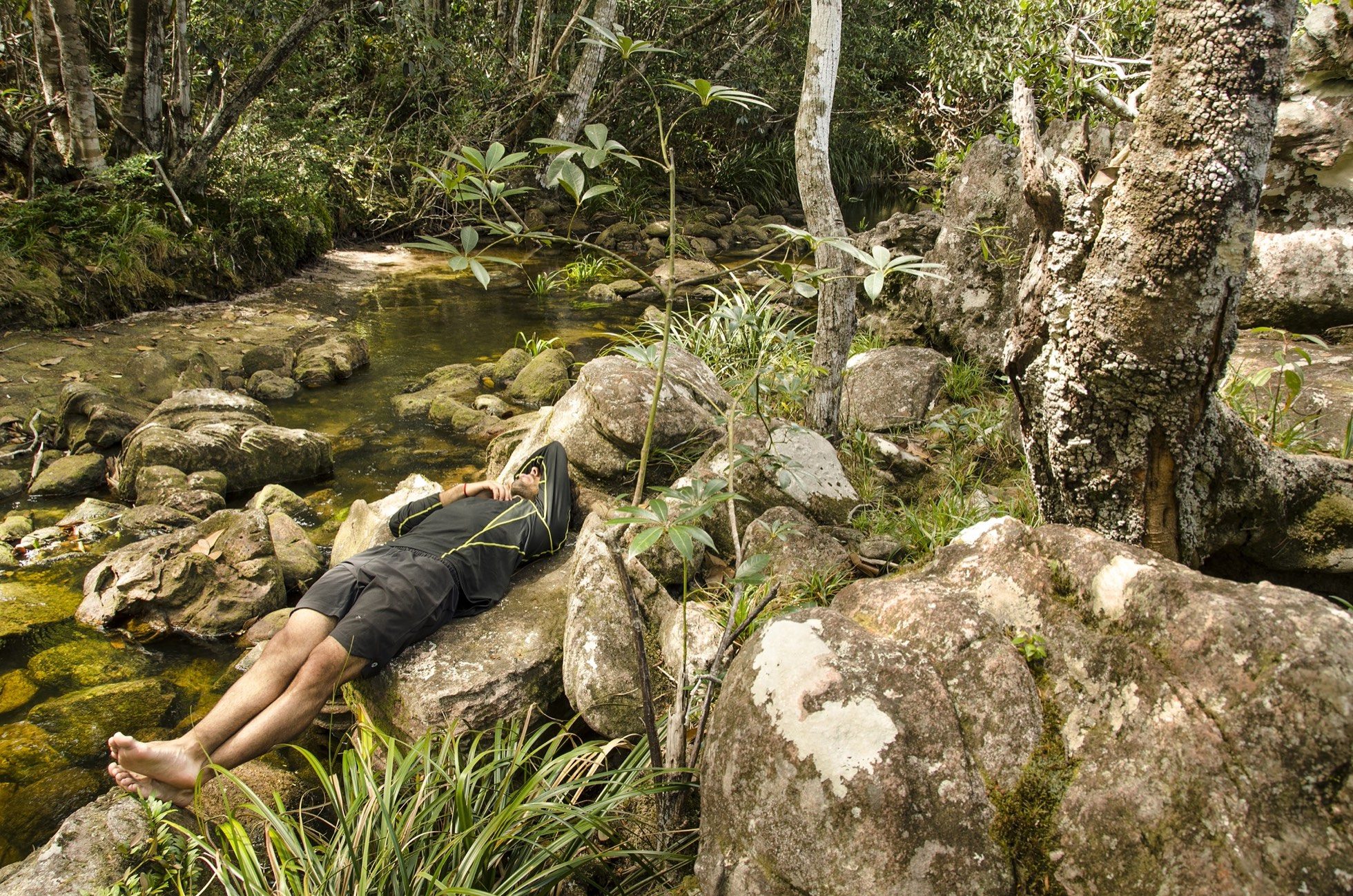
Most nights on Auyán-tepui are spent in expedition tents beside rivers and sometimes under natural shelters.
During the rappel descent, we spend one extraordinary night under the stars at La Cueva, a protected rock ledge on the face of the tepui. By this point you will have become one with the tepui, so no worries.
The first night of the expedition at Kavac and our final night in the wilderness at Isla Ratón are spent in hammocks. At the end of the expedition, we stay at a posada in Canaima, with a proper bed, air-conditioning and a hot shower.
Trust us when we say you may be surprised by how quickly you start missing the wilderness once you go back to “civilization.”
Our standard expedition tents are shared. Private tents can be arranged for an additional cost, subject to availability and porterage requirements.
In rivers along the route. Nearly every camp has access to fresh running water for bathing and washing clothes.
There are no showers during the crossing, so a river bath and a certain amount of flexibility go a long way. The hot shower waiting in Canaima at the end feels magnificent.
There are no conventional bathrooms during the crossing. We follow Leave No Trace practices for human waste in this fragile ecosystem and will explain exactly how everything works before we set out.
It is considerably less mysterious after the first day.
For most of the crossing, there is no electrical infrastructure and no reliable mobile signal on Auyán-tepui.
Bring a sufficiently large power bank for any personal electronics you want to use during the expedition. Our team carries satellite communications for operational and emergency use.
Consider the lack of notifications one of the amenities.
We get wet.
Rain, mist, rivers and rapidly changing weather are part of traveling across Auyán-tepui. Good waterproof gear is essential, but you should still expect to get wet at some, or many, points during the expedition.
Weather can also affect our pace and itinerary. We build a contingency day into the expedition precisely because, in this landscape, nature gets the final say.
Proper food.
Food is an essential part of our expedition. Some of the best conversations and moments happen over dinner at camp, and we take great pride in our tepui menu. It has been meticulously planned for long days on the trail: varied, nutritious and, most importantly, delicious.
Because weight and durability are so important on a remote crossing, we use a combination of fresh and carefully selected dehydrated ingredients depending on where we are in the journey. You will not go hungry on this trek.
All main meals are provided, but guests bring their own favorite snacks for the trail and between meals.
We burn a lot of calories each day, so having something you genuinely enjoy within easy reach can make a remarkable difference halfway through a long stretch on the trail. Energy and candy bars, chocolate, gummies, trail mix, nuts and other foods you already know you enjoy on a long hiking day all work well.
Yes, in many cases, with advance notice. Please tell us about any allergies and dietary restrictions before booking so we can confirm what we can safely accommodate and plan accordingly.
You will need personal climbing and rappelling equipment, including a helmet, harness, descender, slings/runners and appropriate locking carabiners.
You do not need to figure this out on your own. Confirmed guests receive a complete packing list with exact technical specifications before departure, and personal technical equipment can also be rented by prior arrangement.
All communal technical equipment, including ropes and rigging systems, is provided by the expedition.
That depends on your nationality.
We will guide guests through the applicable Venezuelan entry and visa requirements and help with the documentation needed for the trip. Visa and consular fees are not included in the expedition price.
Because requirements vary by nationality and can change, we confirm the applicable process individually with each international guest before travel.
Travel and medical insurance are required, including coverage appropriate for remote adventure travel and emergency evacuation.
We will provide guidance before booking so you can make sure your policy is suitable for the expedition.
Our expedition carries a group first-aid kit and satellite communications, and our team has an emergency response and evacuation plan.
Auyán-tepui is extremely remote. Evacuation from some parts of the route can take time and may depend on our location, weather and other conditions. This is one of the realities of traveling somewhere this isolated, and one of the reasons we take preparation, communication and prevention seriously.
Guests are required to carry appropriate medical and evacuation insurance.
From Caracas and back to Caracas: flights within Venezuela, guides, permits, meals and accommodation are included.